November 2025 Newsletter
November 30, 2025


November 2025 NEWSLETTER
Spotlight Reads!!

“Breaking Ground in Antibody Design: AI Goes Deep”
A team led by David Baker has demonstrated a significant leap forward in computational antibody engineering: using a fine-tuned version of the generative model RFdiffusion, they de novo designed antibodies (including VHHs and scFvs) to user-specified epitopes, then validated their designs with cryo-EM structures showing atomic-level accuracy.
Initial affinities were modest, but after in-cellular evolution (via the system OrthoRep) they achieved single-digit nanomolar binders, with structural overlays showing RMSDs of ~0.8 Å between design and cryo-EM model.
The take-away? This methodology has the potential to shorten and sharpen antibody discovery—targeting exactly the epitope you pick, rather than relying solely on immunization or phage/yeast-display libraries. As the authors put it: this could “revolutionize antibody discovery and development.”

Employee spotlight
Justin Sanders, Industrial Postdoctoral Fellow
Justin earned his B.S. in Biochemistry and Molecular Biology from the University of Georgia (2016) and his Ph.D. in Molecular Biophysics and Biochemistry from Yale University (2024). At Yale, he dug into nociceptive ion channels—defining calcium-dependent regulation of TRPA1 and probing calmodulin–TRPA1 interactions with a blend of biochemistry, biophysics, and electrophysiology. Along the way, he also pursued structural and biochemical studies of Golgi glycosyltransferases using X-ray crystallography and was awarded an NIH F31 Predoctoral Fellowship.
Today, Justin brings that mix of curiosity and rigor to Helix, where he helps translate complex ion-channel biology into clear, testable hypotheses and practical workflows. He’s at his best on challenging targets, collaborating across teams, and turning data into decisions. See his LinkedIn here
Featured services
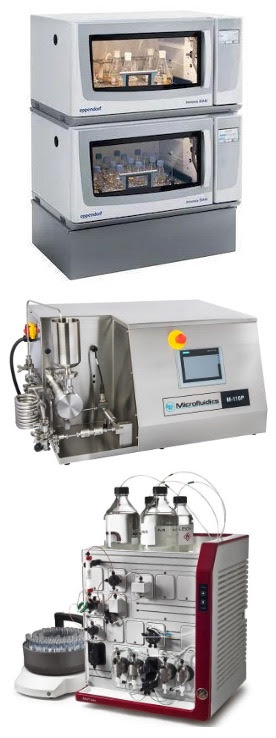
Protein Production - Helix BioStructures is a leading provider of gene-to-structure services. We are equipped with all the instruments & capabilities (Multiple expression systems, Shaking incubators, 5L Bioreactor, Microfluidizers, ÄKTA purification systems, Protein characterization, etc.) required to produce small to large-scale and high-quality structural biology grade proteins.
We provide gene-to-protein service for your research needs and also produce proteins for X-ray crystallography, cryo-EM, and Biophysical characterization services at industrial speed and affordable rates.
Contact us today to discuss how we can help you with your protein production projects.
News you can use

Engineering the Future of Therapeutics with Supercomputing Power!
Lilly has partnered with NVIDIA to create one of the most powerful supercomputers in the pharmaceutical industry — an advanced “AI factory” designed to transform how medicines are discovered, developed, and delivered.
This new system integrates Lilly’s decades of proprietary biological and chemical data with state-of-the-art AI models to:
Generate deeper insights into disease biology
Power scientific AI agents that support experiment design and discovery workflows
Enable more precise, genome-informed medicine
Optimize manufacturing through robotics and digital twins
Built on 100% renewable energy, the platform also supports Lilly’s commitment to carbon-neutral operations by 2030.
As Lilly’s Chief Information & Digital Officer, Diogo Rau notes, this isn’t just AI as a tool — it’s AI as a scientific collaborator shaping the next generation of therapies.
Happy Thanksgiving!

Helix BioStructures Thanksgiving Potluck: Science Meets Stuffing!
This year’s Thanksgiving potluck proved one thing: our team’s cooking skills are almost as strong as our structural biology. From mystery casseroles that defied both labeling and physics, to pies that disappeared faster than a sample left out of the cold room, the feast did not disappoint.
Special shoutout to the brave souls who tried every dish, purely “for experimental rigor.” And yes, we confirmed that tryptophan is real — productivity hit structural lows by 6 p.m.
Thanks to everyone for bringing such delicious dishes, laughter, and enough leftovers to sustain the lab until winter break. Helix may run on science, but days like these remind us we’re powered just as much by good people (and very questionable desserts).
Instrument review

Crystal Gryphon
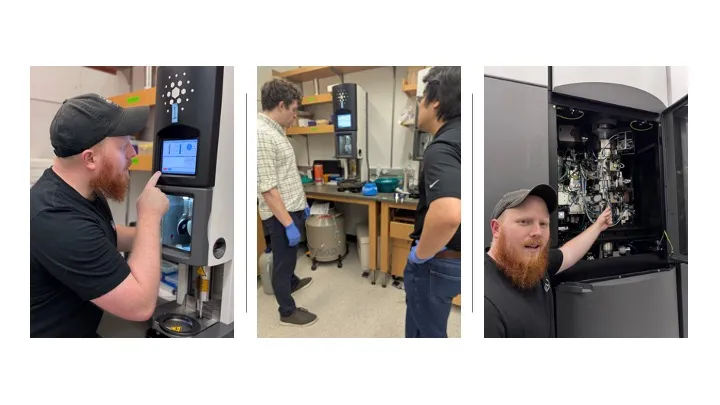
The Crystal Gryphon can set up sitting drop, hanging drop, and microbatch plates with volumes down to 50 nL. The system consists of a 96 channel syringe head for dispensing buffer solutions and a non-contact protein dispenser. The system comes complete with a computer and easy to use drag and drop software. By combining a 96 channel head with a single channel protein dispense head, a 96 well plate can be set up and sealed in less than 1 minute. This assures evaporation will not affect your assays. An optional 24 channel head is available for setting up optimization plates. With the 24 head and the INTELLI-PLATE® 24-4, you can set up 4 optimization assays with each buffer solution.
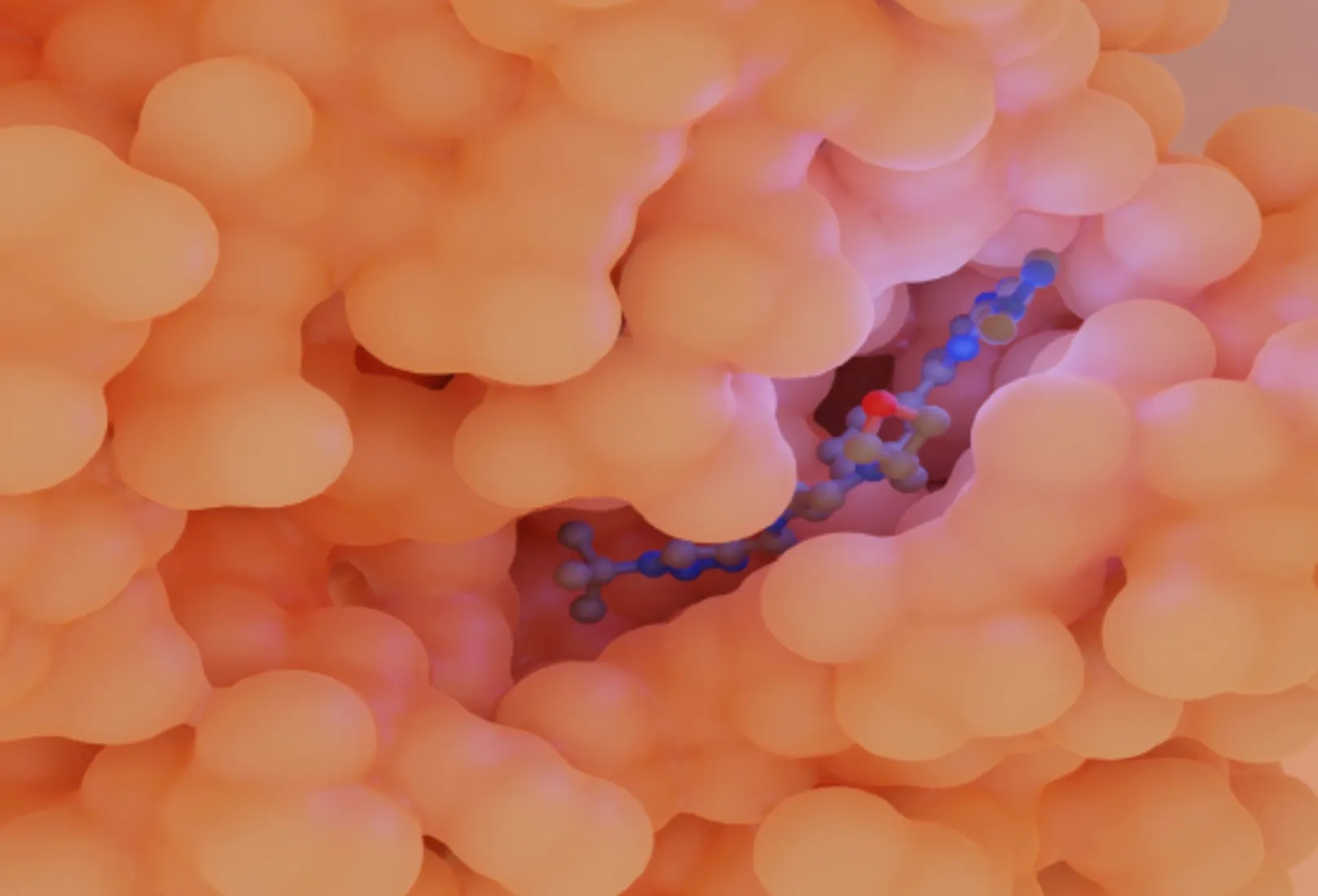
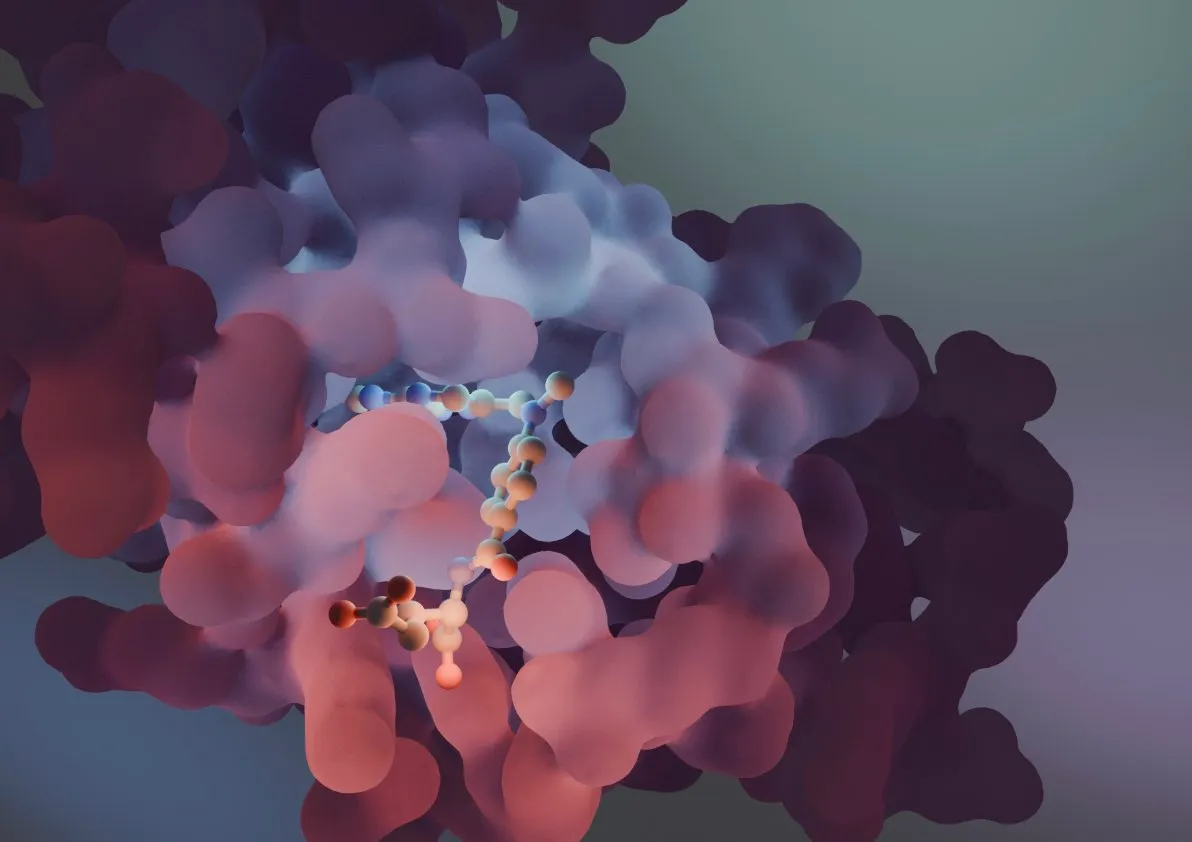
Helix Protein Art